
Fact or myth? The claim that Eskimos have an unusually large number of words for “snow” was first loosely attributed to the work of anthropologist Franz Boas. It was then promoted by Benjamin Lee Whorf and became a flagship example to support his controversial linguistic-relativity hypothesis (also known as “Whorfianism”). This hypothesis posits that aContinueContinue reading “Do Eskimos really have 400 words for snow?”
Category Archives: Cultural key words
“PARAWANING” – Poland’s national summer sport

Judging by the aura outside it seems like the summer has already come to an end. My latest vacation on the Baltic sea is already part of history. I thought I would allow myself a moment of nostalgia by talking about something typically Polish when it comes to spending time on the beach. The peculiarityContinueContinue reading ““PARAWANING” – Poland’s national summer sport”
Moje “trzy grosze” na temat relatywizmu językowego
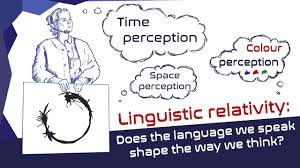
Czy język, w którym wzrastamy determinuje to, w jaki sposób postrzegamy otaczającą nas rzeczywistość? To pytanie nawiązuje do teorii relatywizmu językowego, na którym opiera sie hipoteza Sapira-Whorfa. Flagowym przykładem w tej dziedzinie jest niewątpliwie dyskusja na temat repertuaru wyrazowego dla rodzajów śniegu w językach eskimoskich. To zagadnienie było obszernie opisywane w literaturze naukowej i nieContinueContinue reading “Moje “trzy grosze” na temat relatywizmu językowego”
The broad Russian soul – Широкая русская душа
This is a very interesting concept that Russians are famous for. Sometimes it is also referred to as загадочная русская душа (the mystical Russian soul). Here are three insightful videos that I recommend to watch in order to grasp the idea behind its meaning. The concept of the Russian душа (duša) is inextricably connected with the term тоска (toska – roughly, melancholy-cum-yearning) and судьба (sud’ba – roughly, fate)ContinueContinue reading “The broad Russian soul – Широкая русская душа”
 LANGOLUX