It seems like the debate about equality and discrimination has been around forever. Nowadays, even more so due to the tragic story of Georges Floyd. It seems like the postulates of the Black Lives Matter movement have become part of the common knowledge worldwide. And If I were to ask a random person what equality rights mean to them, they would probably refer to gender, race, ethnicity, sexual orientation….. but, would they think of language and about the way people speak?
A study “Accent trumps race in guiding children’s social preferences” shows that already 5-year-old children have social preferences, that are based to a great extent on the style of communication. In the course of a series of experiments it turned out that children chose to be friends with native speakers of their native languages rather than foreign-language or foreign-accented speakers, even though their speech was fully comprehensible to them. They even privileged accent over race, by choosing children of a different race as long as they shared the same accent and “the communication code”, as opposed to the same-race children speaking in a non-native way. (Katherine D. Kinzler, Kristin Shutts, […], and Elizabeth S. Spelke).
This study serves as evidence to show that discrimination about the way people communicate and speak may start to develop as early as in childhood.
In a business environment, the linguistic diversity is not something that is addressed at the corporate level when we talk about diversity and inclusion. We tend to forget that language is a massive problem when it comes to including people and their ideas and encouraging them to speak up. It usually affects people confidence to share their views when they sound different and worried that they will face ridicule.
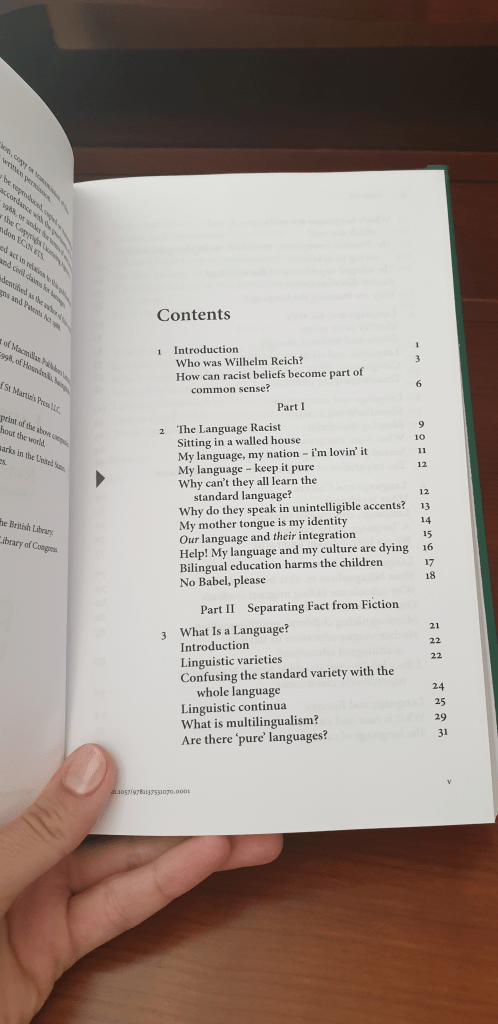
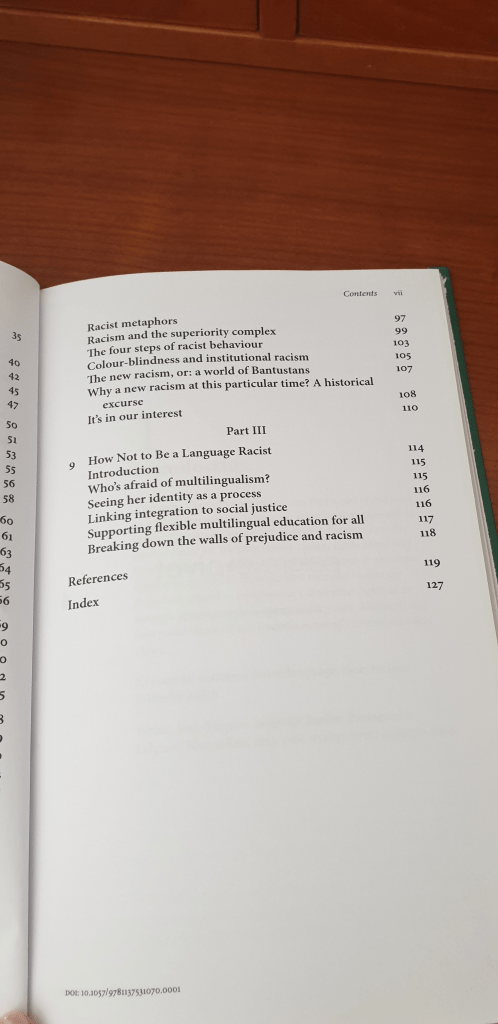
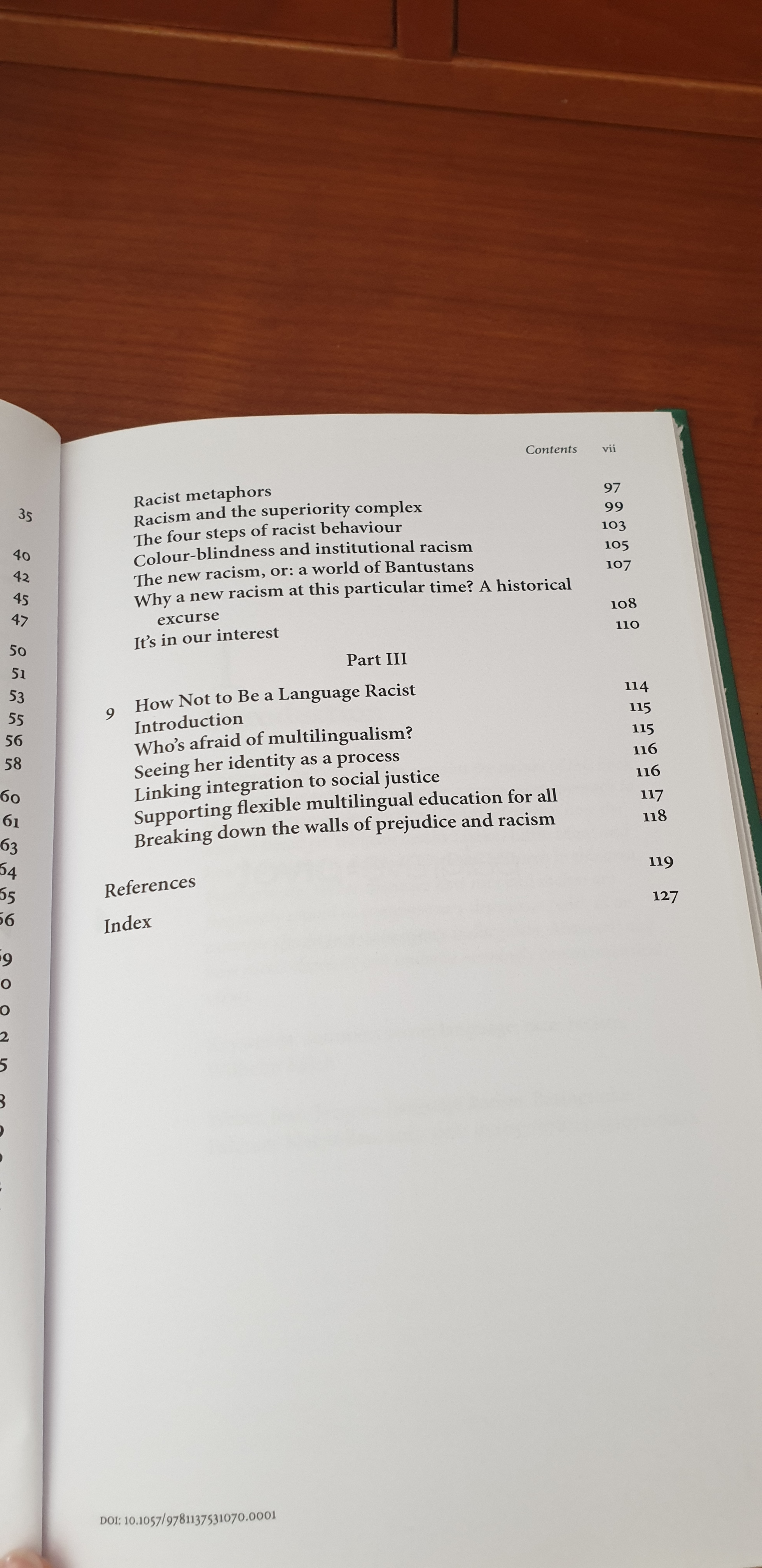
In a book “Language racism” by Jean-Jacques Weber, a Professor of English and Education at the University of Luxembourg, we can learn more about a phenomenon of using language as a proxy for race. It is a covert form of racism, spreading both in the USA and in Europe, as well as other parts of the world.

This book aims to deconstruct underlying “language racist” views in everyday discourse, first by raising them to the level of awareness and then showing to what extent they are based on erroneous assumptions about the nature of social and linguistic reality. The book is a manifesto promoting a more positive view of linguistic and cultural diversity.
The idea of language racism definitely resonates with me. As an expat myself living and working in an environment where I am in the ethnic and linguistic minority, the feeling of having a chip on a shoulder is well known to me. This feeling sort of creeps on you from time to time when you realize that again you were the last to know about something or that you are maybe heard but you doubt whether you were really listened to. It is all about the nuances in the way people interact with each other. Preconceptions and prejudices are deeply rooted in our subconscious and influence our ideas, thoughts, beliefs and even behavior. Therefore, it is very difficult to make a change, as, potentially we would have to act not only on the socially-conditioned but also on biologically-rooted behavioral patterns.
Here is the table of contents of the book just to give you a better idea of what hides within it and a short excerpt to give a taste of it.

 LANGOLUX