Easter (EN) –> Happy Easter!
Wielkanoc (PL) —> Wesołych Świąt Wielkanocnych!
Ouschteren (LU) —> Schéin Ouschetern!
les Pâques (FR) —> Joyeuses Pâques!
Wielkanoc in Polish
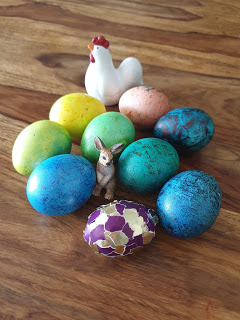
Most of Poles celebrating this holiday do not even realize that the very name of this holiday, Wielkanoc, is of pagan origin, that it used to be called “the feast of new life” and that it was connected with the spring solstice and celebrating the arrival of the new annual cycle … Here too, the so-called “Wielka noc” (literally the Great Night) was connected with the solstice, and indeed with waiting for longer, much warmer days to come. Nowadays Wielkanoc has acquired a completely new meaning. Wielkanoc is undoubtedly the most important holiday for Catholics, who celebrate it in memory of an extremely important and perhaps even the most important event in the history of the Catholic Church: the martyr’s death and resurrection of Christ. However, few Catholics know that this holiday, so important for Christians, has most of the rituals not coming from the tradition of this Christian religion, but from the times and traditions of paganism.
Ouschteren in Luxembourgish
The Luxembourgish term cognates with modern Dutch “ooster” and German “Ostern”, developed from an Old English word, that usually appears in the form Ēastrun, -on, or -an; but also as Ēastru, -o; and Ēastre or Ēostre. Bede the Venerable provides the only documentary source for the etymology of this word.
The old English ‘Month of Ēostre’ was an English month, corresponding to April, which was once called after a Germanic goddess named Ēostre, in whose honor feasts were celebrated in that month. The Germanic term is also deeply anchored in the pagan traditions.
les Pâques in French
The noun “Pâques”, like the feminine singular “Pâque”, is a borrowing from the Christian Latin “Pascha”. The Latin “Pascha” is itself borrowed from the Greek (Πάσχα / Páskha) and the latter – via the Aramaic “pasḥa”, – from the Biblical Hebrew, “pesaḥ”. “Pesah” is said to be derived from the verb “pasaḣ” which means “to pass over, to spare “. According to the Bible, the Jews had been ordered to sacrifice a lamb free of all blemishes and to smear its blood on the doorposts so that the powers that would come to destroy the firstborn Egyptians at the time of the tenth plague would pass over these doors without stopping. Every year the Jews commemorate this event on the feast of Passover (Pessa’h). According to the Gospels, the Passion of Christ also took place during these celebrations. Therefore, Christianity has invested this feast with new symbolism – Christ becoming the lamb sacrificed to save humanity from its sins.
The French language distinguishes between the Jewish Passover (la Pâque – always singular) and the Christian feast of Easter (les Pâques – always plural). The first commemorates the coming out of Egypt and the regained freedom of the children of Israel. The Christian feast is multifaceted. It commemorates at the same time the Last Supper instituting the Eucharist, the Passion of Christ and his resurrection. It was only after the fifteenth century that the semantic distinction was marked by the spelling between “la Pâque” designating the Jewish feast and “les Pâques” designating the Christian feast.
 LANGOLUX